9.03.2024

A Vision Realized

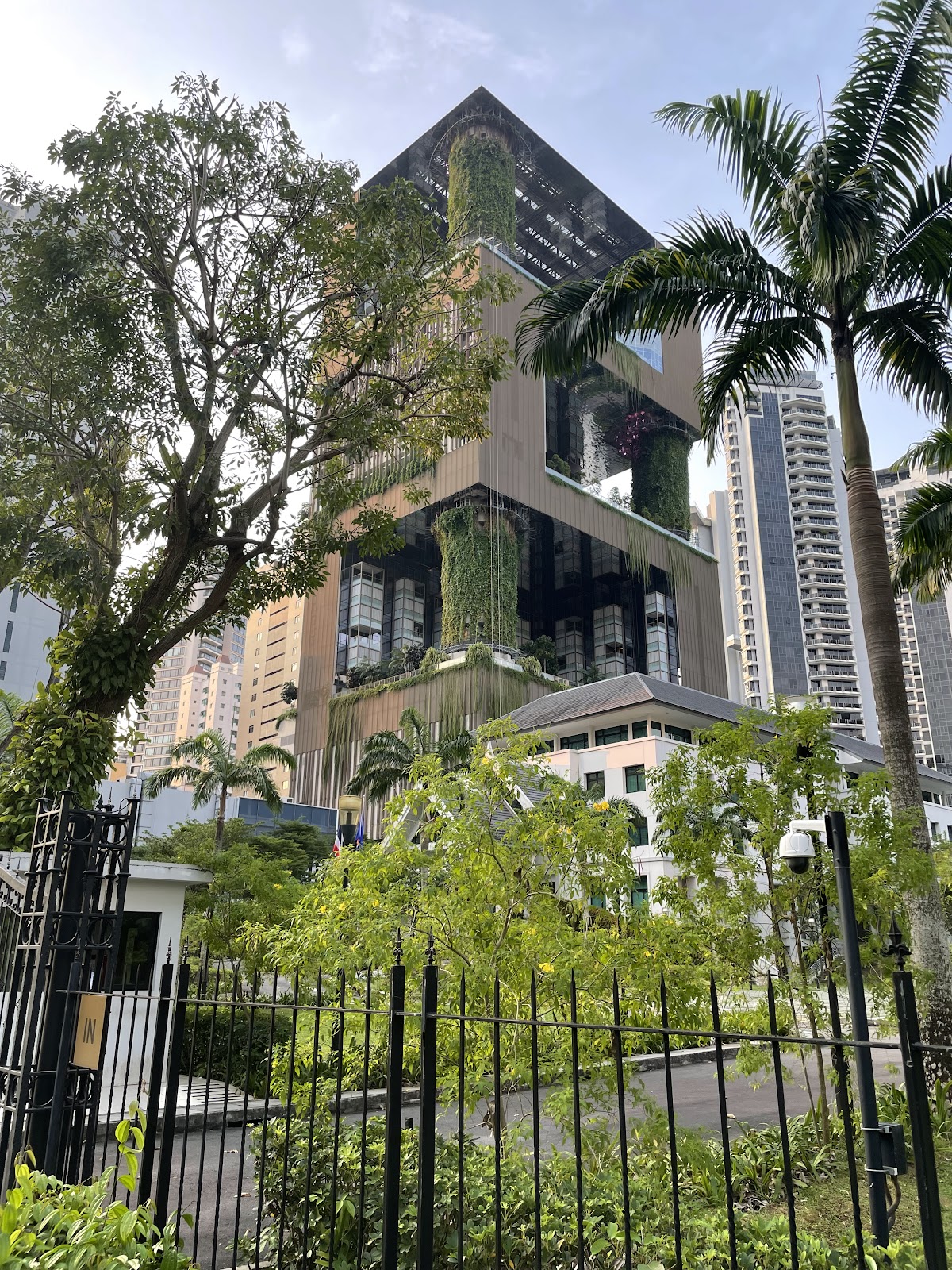
Across the Kallang River from my apartment block is the Kwong Wai Shiu Hospital. I can see the small complex from my bedroom window; three modern buildings with tall windows, rooftop gardens, a cubist facade. It's inviting like a hotel. What I like most are the thick vines that hang from each balcony. Bushy yet threadlike, a dense cascade that sways under the rain and wind. The hospital looks fuzzy to the touch--a far cry from the typical imposing medical institution. 

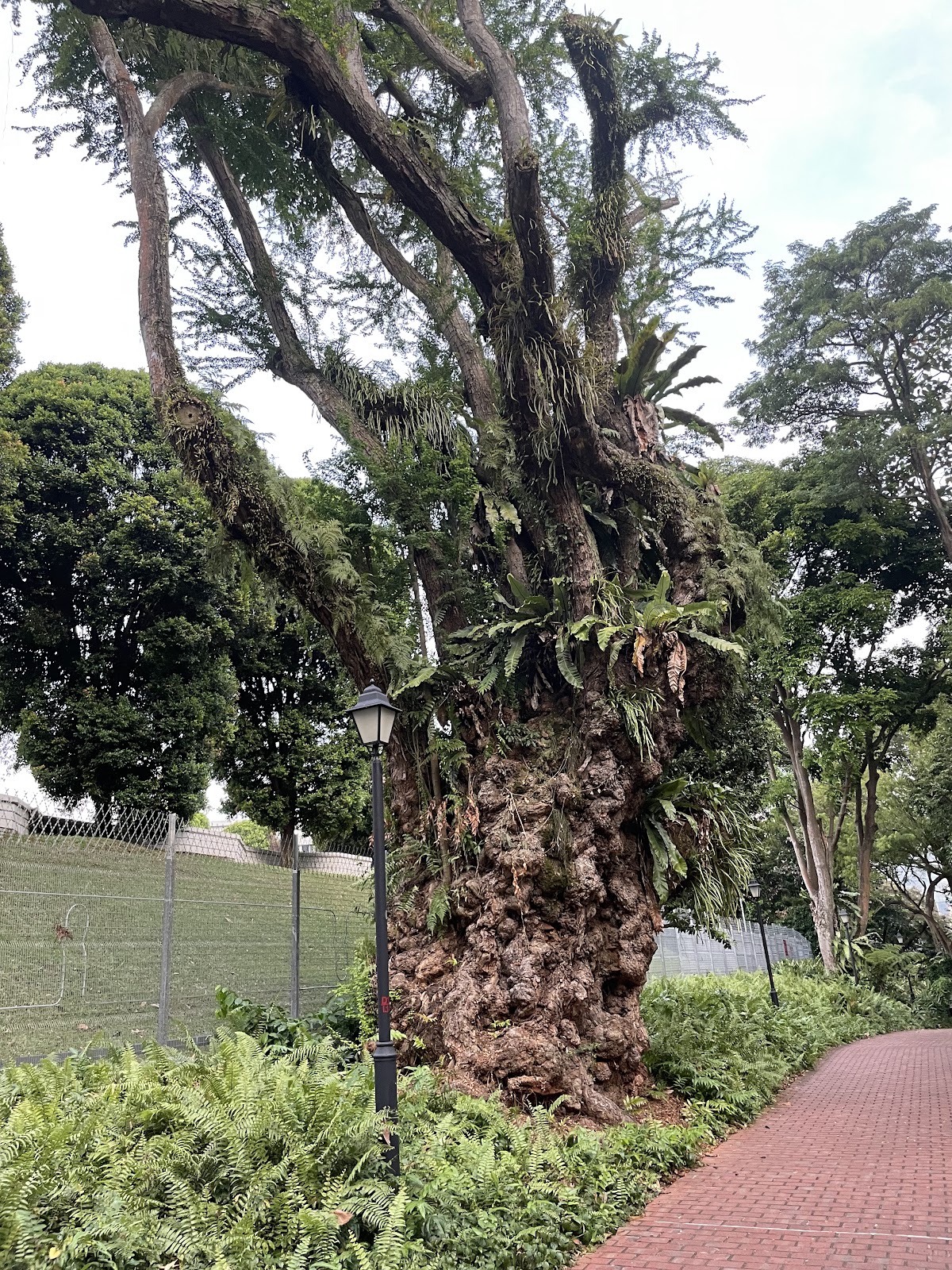
It is quite common for buildings in Singapore to have greenery overflowing down their outer walls. The built enviornment is a mimicry--the ubiquitous Rain Trees that tunnel the highways and umbrella the riparian paths, for example, are draped with jutting ferns, coats of moss and flowers, shooting spines and silky bunches, a layered canopy sheltered by a flat-topped crown that cannot but blossom amidst such abundance of water, sun, warmth. The city emerges from an equatorial dream. 

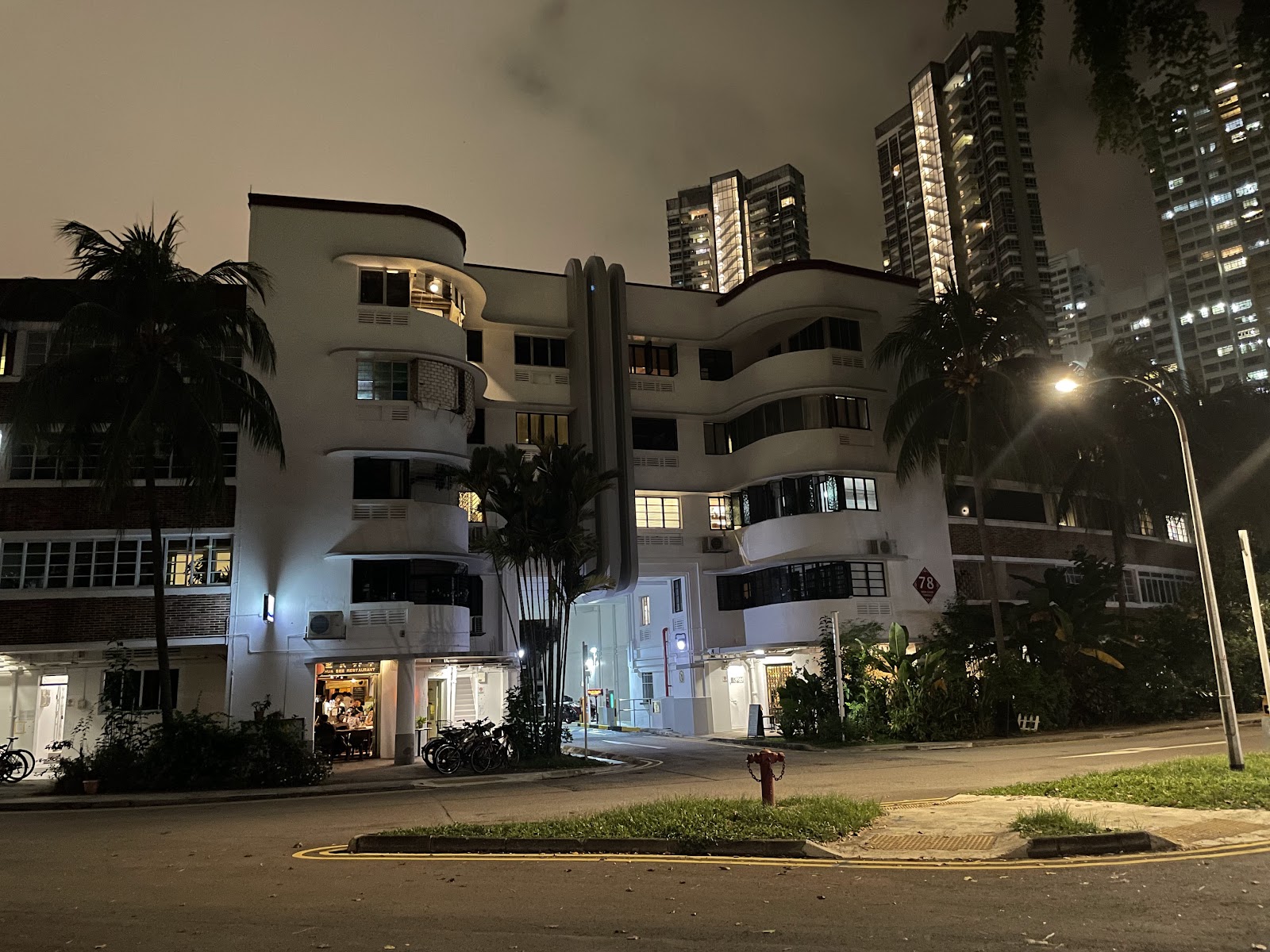
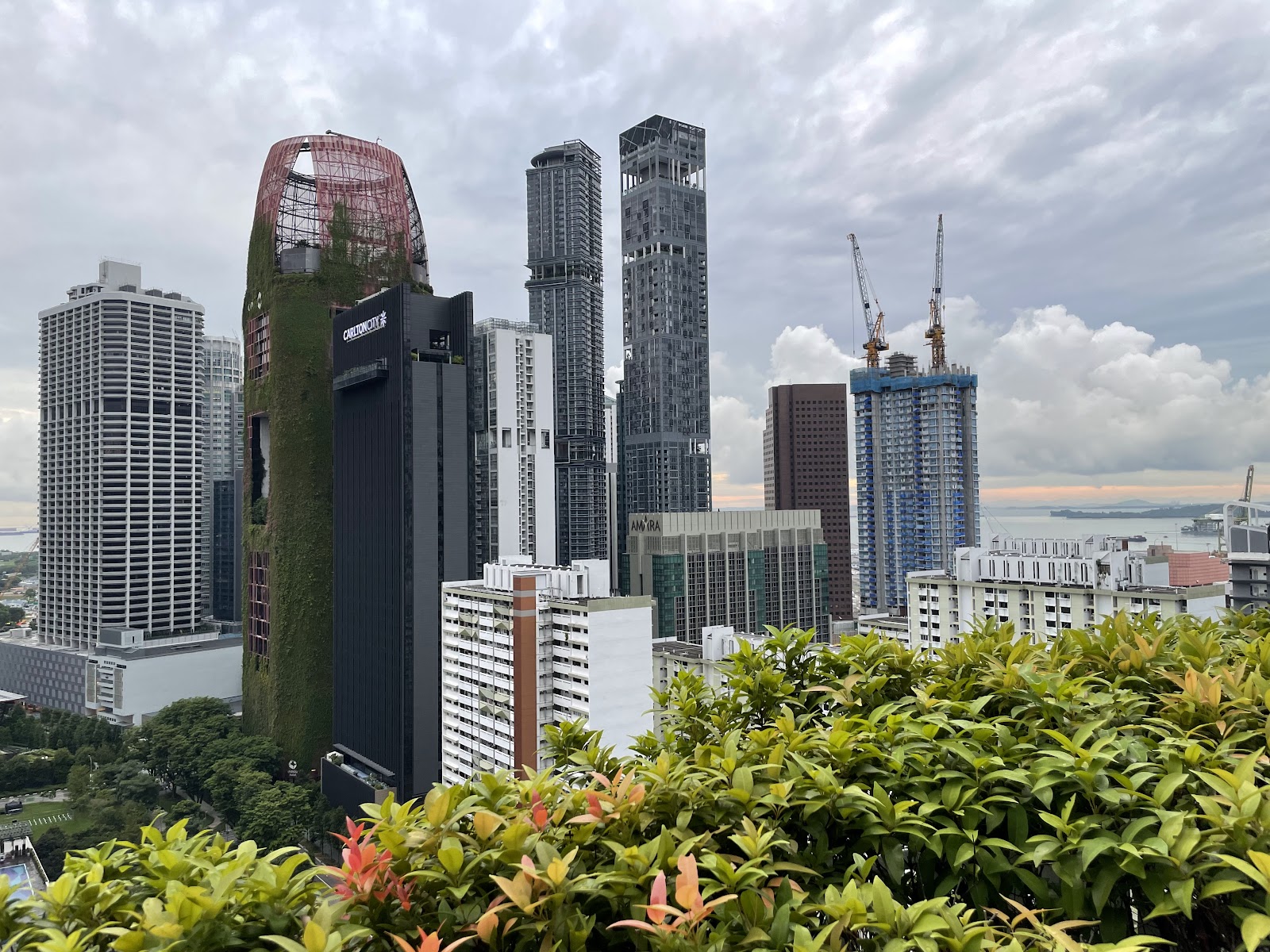
Lee Kuan Yew envisioned a garden city from the beginning, and the national approach since has been full-throated. From the CBD skyscrapers to the airport, the MRT stations, the art deco neighborhoods, concrete is meshed with life. 

Their style is a peaceful manicured softness, an abandoned yet welcoming allure. The caress and gentle of something slow, natural, geologic. It blunts the harshness of a city of millions. It soothes the contours of humanity. 

I took pictures of the buildings I liked most (plus a crazy tree). The integration of foliage is prevalent, and the layering is omnipresent. This is the 21st century rainforest. 


7.23.2024

From the Universal Gate

On the side of the Tsz Shan Monastery, in the New Territories, there is a stone trough of water resting on grey river pebbles. Bobbing on its surface are wooden bowls and ladles. Their purpose is as tools to make an offering. The lady beside me misinterprets them for a drinking apparatus despite posted warning in Mandarin and English. A guard comes to chastise her--she looks quizzically before finishing her drink. I fill my bowl with a scoop of the cold water, and after a few deep breaths, I begin my walk down The Compassion Path. 

The temple is new but styled as old: dark wood like the shrines of Kyoto, illustrations from the Yulin Caves lining its walls, overgrowth creeping from the dense surrounding foliage. This newness is unsurprising. To get to Tsz Shan, we drove through deep tunnels connecting the scattered islands of Hong Kong, past countless towering apartment buildings and skyscrapers. Most everything was built in living memory. I was shocked to learn that the Mandarin Hotel, at twenty-seven stories, was the tallest building in the city when it was finished in 1963. Now it is shadowed on all sides. 

Waiting at the end of The Compassion Path is Guan Yin. Her towering statue, imposingly large notwithstanding its pure whiteness and slight groundward tilt, is more to the scale of the hills behind than the other figures in the temple complex. She looks beyond the walls with the warm gaze of the Enlightened to the common features of Hong Kong; steep green mountains rising from the sea, craggy shoreline, narrow protruding rectangles filling the space between. For she is the bodhisattva of compassion. Between her fingers she holds a pearl. In her hair is Amitabha Buddha. She empties a vase with her left hand into the Thousand Wishes Pond, to which I am walking to pour my libation into.

This part of the world has changed at an unprecedented pace and scale. Living people born where I currently stay started life in a kampong of attap roofs, a rural Malay village devoid of modern amenities, not so different than one from centuries before--now it houses a KFC and a mass-transit train station. Victoria Harbour glistenes in the night with neon reflection, and the only remaining Chinese junks take tourists on joyrides between the Supramax bulk carriers. Over 70 million people live in the Pearl River Delta these days, more than seven times the population there fifty years ago. 

Such rapid transformation is jarring, I can imagine. In the blink of an eye a new landscape has arrived. But it is inspiring, too. Just see how much can be done in a lifetime. Revel in the wonders of human ingenuity. It's part of why this region draws excitement. It holds a gravitas, an undeniable proof that the limits of belief are untenable. Here I feel my fears of change have been conquered, my nostalgia put to rest. The view she looks over still resemble that in Summer Mountains. The future can glitter on its own. 

The Path towards Guan Yin is wide, inevitable, and it is most beneficial to traverse with intention. Some water spills over the bowl's edge onto my shoes--whether my unsteady gait or focus is to blame I'm not certain. The tropical sun bears down with intensity. With every step the setting grows quieter, the figure more domineering. Her soft smile washes down with empathy. 

As I reach the end, offering what I carried in return for the wisdom of the divine, I ask for guidance in my desires, guidance to achieve fruition of what I most need. The salty ocean breeze combs my hair. Amidst the noise, the swirl of the world, there is a place to be found. With each passing day I sense I am closer.

6.16.2024

Lion City

The air is placid in the Heartland--saturated, enveloping, heavy. I look up to the streetlamps bounded by low clouds, their light reflecting off an opaque ceiling. It creates a dim haze extending throughout the density. What I thought was a fallen brown leaf on the brick beside my feet had moved from when I first saw it. A narrow oval with a spinal vein, a tropical leatherleaf slug, slowly making its way across the damp Earth.

The Heartland is quiet at night, once the traffic has receeded and the markets have closed and the only people out are drinking Tiger Beer and whiskey around plastic tables doused in shadows. It's a far cry from the upscale wine bars and Michelin nominees, the plastered cityscape of allure, though their separation is a mere 15 minute train ride. But even there, in the center, it is quiet. Cars are few for their ungodly pricetag and the city's successful congestion pricing system. The only boisterous groups I've noticed are British tourists. The humans in this city-state, their landscape, all quiet. 

I find Singapore built at a human scale. The streets are narrow like their thin residents; the hawker stalls are manned by sole proprietors, all tools at arms-length. Last week I walked for 30 minutes and crossed three neighborhoods. Back home, I walk 30 minutes and haven't yet exited one. The American journey to the Heartland takes hours, days. The entire nation of Singapore is smaller than New York City. 

This human-centered development is tangible within the populous. I sense community is strong among the numerous elderly, who gather for tai chi and lor mee in the public spaces. Traffic lights change slowly--I suspect to account for the slow walkers who helped lift this place into the ranks of the First World. Singaporeans have the second-highest life expectancy in the world and are top 10 in the UN's Human Development Index, a measure of living standards and education. The youth are as phone-addicted and materialistic as anywhere (the global hegemony spares none, after all), but both young and old, I think, seem acutely aware that they're better off here than nearly anwhere else. Grumbling about the dominance of the People's Action Party (PAP) stays at that. 

The Singaporean Heartland is an interesting term. I wasn't sure I heard it right the first time, because how could a city have a Heartland, especially one known for its immigrant population and lack of natural resources. Apparently it was coined by politicians in the early 1990s to give a sense of esteem to the mostly ethnic-Chinese "middle class" who weren't part of the Global City project the PAP was undertaking to attract wealthy foreigners, multinational corporations, and a level of prestige that would lead to Formula One races and major defense summits and six shows of the Eras Tour. When I walk past the small cafes at the bottom of my building, the laundromat, the hardware store, it's evident I'm probably the only non-Singaporean living here. I get to see a life not meant for white-collar expats. 

These Heartland neighborhoods are constituted by public housing developments. The one I live in is from the early days of Singapore's industrialization, its units ringed by crown molding and an arched walkway of brown glazed tile separating the long kitchen from the living room. Public housing here isn't like that in the US--the Housing & Development Board (HBD) owns 1 million units that 80% of the population lives in (the state takes care of everyone). I put "middle class" in quotations because, here in this average complex, the parking lot is filled with BMWs and Mercedes Benz. Singapore's GDP per capita is over $88,000, after all.  

The people's reserved nature means outsiders are starkly so. I think I would do well as a native son. This city is filled with people like me who don't really have a natural place on this planet anymore: generational immigrants no longer interchangeable with those in the motherland, long-term economic migrants accustomed to their adopted nation, brown-skinned people more comfortable with English than their ancestor's tongue. Singapore has approached multiculturalism in a different way than the States, but both rest on their citizenry becoming one people. I sense a national identity parallel to "American" here. I think that's why the Heartland has drawn me in--it's a home, a firm, established one, not an effort to be something else.    

12.22.2023

Leaving the Crystal Mountain

On the summery shores of a placid Lake Michigan, still and clear except a wandering sailboat close to the horizon, a friend brought up The Snow Leopard by Peter Matthiessen. I had been searching for accompaniment on the impending journey. I didn't know much of the book, only that it was nonfiction and slightly Zen. Later, walking home with the setting sun, gentle lacustrine wind kissing my shoulders, I looked deep into my reading list--there it was written, with a message next to it: (read when u get to Chi). 

When and why I left myself this note I cannot recall. My reaction was more suspicion than satisfaction, for validated foresight brings about a strange sensation. What is random coincidence, and what is inevitable? How dominant is my instinct, my blanketed subconscious? Something about this book called to me before my arrival. It spoke again in the early days. I have learned to listen. 

The Snow Leopard is a travelogue of an expedition to northwestern Nepal in 1973. The impetus was GS, a biologist, wanting to study the autumn mating practices of Himalayan blue sheep. Matthiessen joined for the journey rather than the destination. Aside from the sheep are the Buddhist monasteries he hoped to pilgrimage and, notably, a potential glimpse at the elusive snow leopard. At that time few outsiders had ever seen one; the solitary predators stalk the most high, most remote swaths of Asia, supremely camoflagued and adept and shy. They are a silent phantom on which wonder can be projected--an incarnation of the unknown, the omniscient, the unattainable. 

GS, Matthiessen, and their sherpa porters set out in late summer for the glacial slopes of Dolpo. The narrative is chronicled by daily entry--I began reading near the end of September, so the days aligned almost exactly with mine 50 years later. The air grew colder and the burdens grew heavier both here and there. Our rhythm synchronized as I, before concluding my day, would read of the splendors and tribulations my distant companions had lived, and reflect on mine from this small corner of the world. 

Before long I could hardly separate the story on the pages from the story in my mind. The overlap was uncanny--like I was opening a portal that transported me to my own thoughts and memories. The physical landscape, its jagged cliffs and sparse villages and endless sky, enmeshed with that I had passed in Ladakh years ago. Talk of the snow leopard, that specter cloaked in spotted mystery, was a manifestation of my personal fascination. The highs and lows, the tortuous yet hypnotizing voyage of novelty, suffering, growth, fear, snowy passes and shaded crevices, it all blurred in an enigmatic familiarity. The words eerily echoed the murmur of my spirit. 

Much of the book wrestles with peace and tranquility. This may be found--but can it be kept? Retaining harmony is a formidable task in the face of our constant turmoil. The onrush of sedentary problems, gaining in magntitude as Matthiessen departed from Shey Gompa at the foot of Crystal Mountain, prompts a regret for not holding the prior moment, for moving on to imminent distractions. This is a difficult reality to swallow. Was the journey not to gain something everlasting? The apparent futility of permanance, of solidifying a fleeting essence, burns alongside the unquenchable longing for answers.   

Aldous Huxley writes in Brave New World that "feeling lurks in that interval of time between desire and its consummation." The world is trending towards instant gratification--eliminatation of the discomfort of waiting. After months of sleeping on frosty earth, after miles through the harshest, most inhospitable terrain, Matthiessen never does see the snow leopard. We can strive, but there is no guarantee of satisfaction.  

If understanding is transitory or, worse, illusory, what does the journey accomplish? What justifies the slow, opaque, moiling process? What is the snow leopard? 

I search for a central force to gravitate around. The push is the purpose for now, I think. As Matthiessen and company trudged onward, chasing goals overt and not so much, I too drive forward into unseen territory. Matthiessen wrote: "God offers man the choice between repose and truth: he cannot have both." I was drawn to this book of bodily and spiritual travail by some power, for some reason. There remain mountains to cross during the long journey home. I'm not sure how it ends. 

7.26.2023

Signs from Above

The first page of The Unbearable Lightness of Being rubbed me the wrong way. Milan Kundera, Czechoslovakia-born Paris resident until a few weeks ago (RIP), is mulling the impact of an event were it to happen once compared with if it were to eternally recur. He says a one-off life is as non-notable as a 14th century war between African kingdoms, "a war that altered nothing in the destiny of the world, even if a hundred thousand blacks perished in excruciating torment." The long European tradition of viewing everyone else's history (and lives) as inconsequential rides on. I fail to see how Kundera's precious Prague Spring had any notable impact on "the destiny of the world" either. Getting off on the wrong foot, I was hardly consoled by his continuation of the metaphor--that were the African war to happen over and over, it would take a different form; "a solid mass, permanently protuberrant, its inanity irreparable." 

I think this book is characterized by toeing the line. Set on the boundary of the Iron Curtain, its passages shift between objective observer and impassioned participant, mind and body, empathy and disgust. Actions are rationalized and embraced raw. As the title suggests, Kundera explores the fleeting nature of existence, the Lightness, plus its heavy flipside that ripples across relations and generations. 

Such a novel fits this phase of my life. It is present in every direction I turn--on the shelves of close people, in articles I read, even in the news. Whether this prevalence is frequency illusion or a sign from above I'm not certain, but I think it prudent to listen when called to. In this time of sorting, a human story unveiling our heterogeneity soothes.   

Through the pages runs a singularity; the lives lived, by dreamers and lovers, their mistakes and triumphs and even what's out of their control, it all happens blindingly fast and only once in an unending onward direction, a ceaseless march with all the time to look and reach back just far enough to graze with the fingertips, always perfectly out of reach. It's Unbearable. 

Part of accepting Being as irrevocable is to simplify, overcommit, generalize, and sacrifice. Though this is well-crafted literature written by an insightful man, I think it contains an acknowledged failure to capture the wholeness. In the narrative too, we go down a path with no hope of return, descending into the only universe here. Kundera taps in and relinquishes control. There is no attempt to answer what any of this is about. It goes on, amazingly. 

Beethoven's motif "Es muss sein!" translates to "It must be!" This take on fate embodies the philosophy of the first-person narrator, the author: there's one transient chance to make a decision, and there's no way to validate whether it was right or wrong, good or bad. Some of the characters commit to love, some to ideas, some to freedom. Who is to say which is better? In the subjectivity lies the beauty. 

My initial annoyance was assuaged at the end. A group of European and American intelligentsia travel to the Cambodian border to demand Vietnamese occupiers let humanitarian aid in. Amid a backdrop of commentary on kitsch and leftism, the bickering, righteous marchers reach the border and are met with silence. Their grand statement, built on the perceived importance of Western writers and doctors and actors and professors, is spat on by power, humiliated under lack of attention, destroyed. Sooner or later we're all humbled as mere Beings; weightless, burdened, passing our way through the Earth.

6.01.2023

GSG

Every spring, in San Antonio, bunches of loquats appear on the branches of broad-leafed trees. The fruits pull each arm downward under their weight, as if beckoning a sun-tanned hand to reach up and twist them free. The tree grows tall, and many of the bunches have taunted me from towering heights where only the birds and beetles brave enough to climb can reach them. One time, my cousin scaled far up the tree in our neighbors' yard to retrieve a bounty. I'm not sure how he found footing in the dense thicket, for the loquat tree is not truncated but is instead bushy, shrub-like, layered--full of life. 

Personally, I prefer tangy to sweet. Over the course of the season the loquat turns from bright yellow, sour and firm, to a soft, sweet orange. By eating them during the first few weeks of spring I'd usually be the first one there. Sometimes small holes where a worm or insect had already started feasting pocketed the skin, but most were still up for grabs. 

In those weeks the tart, refreshing juice would run down my forearm after I bit through the skin. I would eat them straight off the tree, you know. None of this pre-washing or skinning. As I child I snacked on them while playing basketball, and I cleaned my sticky fingers by combing through the thick St. Augustine grass. 

I heard a story that the Portuguese first brought the loquat tree from China. Upon reaching the Forbidden City, the sailors offered a rose bush to their royal hosts, a thorny, ligneous gift that offended rather than flattered. In return, the Chinese gave their visitors a sapling they knew would yield a bitter offspring, acidic and nearly bile, plus a smattered mess underneath its canopy. 

But when the rose bush bloomed, the imperial court was in awe at the beauty and smell of the flowers. And the loquat tree, with newfound rigor from the Iberian sun, produced fruit that matured beyond the premature into a delectible, succulent sweetness (I tasted these plump specimens in late May in Spain--sweetness they truly were). I assume the Spaniards or Canary Islanders brought the tree to San Antonio during their settlement in the 18th century. The South Texas climate has the same effect on the fruit as was first seen in Portugal. 

In those spring days of the loquat, when San Antonio celebrates Fiesta, the end of the school year, and the sparing weeks before oppressive heat, Spurs playoff basketball would infect the town. The 2000s Spurs of my childhood were a legendary squad: consistent, lethal, always in the fray to win it all. And win they did. The two decades led by Tim Duncan's stoic excellence constituted an unprecedented streak atop the basketball world, with 22 straight playoff appearances and five championships to show. The players in the show seeped into the heart of the city: Tony Parker with his speed and soft touch, Manu Ginobili's obdurate boldness, the sage Coach Pop. 

I would imiate the dribbles and pirouettes I saw on TV in our backyard ad nauseam. The titanic clashes between giants and sharpshooters and slashers were the stories I recreated. I rehearsed myself finishing in a whirl around the rim, swishing jumpshots at the buzzer.  After tiring from sprinting corner to corner, I'd pick a few loquats and cool off under the shade of a floruit tree. Life revolved in this way. 

Since I left San Antonio for college, the Spurs haven't played much playoff basketball. I aged and so did our team. I haven't been there when the loquats emerge--I haven't eaten one off a tree in many years. I understand. Things change. 

But this spring, the Spurs struck gold by winning the top pick in the 2023 NBA draft. Who knows what prompted this blessing from the universe. Maybe it was in return for the years of service to the pure game. Awaiting is an otherwordly talent from France, Victor Wembanyama. 7-foot-5-inches tall, 8 feet from outstretched finger to outstretched finger, a shooter and shot blocker with Gen Z skills and that eternal unteachable skill, height. His impending arrival to the Spurs is widely viewed as a perfect fit; for the team, a chance to recapture the glory of sustained dominance; for the raw diamond of a prospect, a home to polish and refine into greatness. The pieces are fitting together. The people sense it. 

Sports has a way of infiltrating the lives of its dedicated followers. This has been on my mind in the days since the Spurs landed the #1 pick. I have hesitated to write about basketball before given the tabloid-esque quality of sports media these days, but I've also serendipitously come across some stellar sports writing recently: Roger Federer as Religious Experience by David Foster Wallace, the first half of The Patch by John McPhee. How the promise of a lanky 19-year-old over 3,000 miles away can send thousands of people into ecstatic fervor in an instant, how it can tap into the soul of a boy who adored his team, is nothing short of special. There's really nothing like it. 

With the resurgent aura of the Spurs rising, and the sun finally surfacing from under winter's cloak, I can taste the loquat on my tongue once more. 

4.17.2023

The Last or First Day

"We can always come back," my friend said as we walked towards the car. In a sense he's right, I guess. I just couldn't bear to leave. The sun shined across a cloudless sky that day, not hot enough for any discomfort, cool and gentle wind keeping the skin clear. The chatter of birds drifted through the air. I was shown once again how idyllic the neighborhood can become. Its charm is brightest under the quiet Sunday aura of blossoming trees. The colors of the houses seem more radiant, the bricks and cobblestone of greater character. For a while I had traveled to another slice of space and time. The whiplash left me sore. 

I've heard the peculiarity of humans is our propensity to narrate. We frame existence as a continuous story, self-idealized protagonist at the fore, structure and rhythm layered onto the eras that pass. In these liminal moments the connecting thread surfaces--what once was returns once more. All the little things that add up over time, mounting into big things, are as if they never happened. The magnolias and cherry trees emerge from their winter slumber to a life never lived. 

Maturity seems to mean many things, but one aspect of it must be the ability to organize. The sentiments of one instant cannot rule every instant. Growing responsibility demands a level of competency, professionalism. Someone needs to hold things together.  

But at what point does compartmentalization go too far? When are the demarcating walls built too high? Maybe a dam is a more apt metaphor to consider, and a more appropriate barrier. Instead of deep, expansive, permanent divisions between the growing complexities, maybe a more responsive construct is useful. One with a valve to maintain the flow. 

We quietly drove east into the darkening horizon, together still after all these years. We rolled miles and miles and miles across the familiar pavement. The end of an old day ushers the birth of a new one, one that can be filled with the love of the past and the joy of the unknown. The partitions are more like fluid boundaries than anything else--I think I've learned how to cross over, for I know the linear path is all a matter of perspective. I can put the times gone in a box, and I can leave it unsealed for when I need them again. 

3.05.2023

A Story of Migration (Uganda 1962- )

Manafwa Road, in Mbale, bustles under the equatorial sun. Boda bodas swerve around cratered potholes and empowered pedestrians, ferrying shoppers from errand to errand. A shiny TotalEnergies gas station is conveniently adjacent to the taxi park, where drivers loiter by their vans and hawkers push corn, sugarcane, plastic, to anyone around. Activity on the street is frenetic even in this relatively small town.

We came here to see the site of my father's birth. Fifty years of separation means the memories are mostly overridden, but the building my grandfather constructed remains standing. The street was much quieter back then. Same with the Kampala corner my grandmother grew up on--Uganda's population has exploded since they left. Amidst the change, however, there remain signs of what once was. Many of the shops lining Manafwa Road are still South Asian-owned. 

My mother struck up conversation in Urdu in one of these businesses, to check if maybe someone had stayed through Idi Amin's regime, if maybe someone remembered when this was our home too. She found the ears of a more recent arrival, Ahmed, who came from Pakistan a few years earlier. With great hospitality he offered food, drink, shelter, anything of service to fellow speakers of his native tongue. Very Ugandan of him--the culture is communal, exuding a jovial tolerance evident in how the people drive and gather and laugh. 

Ahmed told us he initially hoped to live in the US. In 2017, he flew from Punjab to Brazil, where he had landed a visa. This man subsequently traversed the length of the Americas towards the allure of a better future. Our exhaustion from tracking mountain gorillas for a few hours in the Bwindi Impenetrable Forest just days earlier was now shameful: Ahmed had crossed the Darien Gap, the jungles of Central America, the Andes. He reached the US-Mexico border at Tijuana months later. After jumping the wall, he was swiftly detained. He shivered and despaired in detention for an entire year before deportation back to Pakistan. 

A home is left, I thought, and becomes home for another. Movement, that defining trait of humanity, is our foundation. Where we are, how we got here, where we will go. What is the destination of our never-ending journey?  

I sensed perseverance in the bones of Uganda. Humans have walked there longer than almost anywhere else. Strength, and perspective, comes with such old, deep roots. There is a general calmness flowing from the shared certainty that life goes on. I stood at the grave of my great grandfather, in the soil my ancestors once came to, and was connected. 

I have no doubts that people will dot those fertile, rolling hills until the end of time. 

1.19.2023

Life Snippet

The setting sun sent pink rays shooting eastward. The backdrop to the towers morphed from cotton candy to sorbet clouds, magenta and streaking blues, a lightshow on the ceiling of the world for all to enjoy equally, far below. The sky over the river was darker but brilliant, too. It was the latter stages of a grand finale: the Sun's reign. 

Collective witness has a way of bringing people together. The experience is shaped by the presence of those also there, reveling in the undeniable realization that something bigger, something special, is at hand. An unexpected break in the way of things--an inbetween, liminal moment, I guess. Someone turned the music up, and the waves pumped in on a detectable frequency. My phone buzzed with footage from across town. A street corner bathed in cherry blossoms. The stuff of creation, dreams. 

The hierarchy is of no consequence here. Anyone can stop to see, to feel. The lucid colors wash time into a new phase. For an instant we were finally one. If we know anything, we know another instant will come. 

12.08.2022

Historical consciousness

I've been grappling with how to approach Absalom, Absalom! for weeks now. It seems every time I look away it's still there, connected to the entirety, somehow escaping the eternal struggle to simultaneously define itself separate from and within the group. Faulkner personified shared emotions into individual beings--ideas into human essence. John Jeremiah Sullivan wrote in the introduction, which is the best one I've ever read (I read it after finishing the novel as I tend to) and a most challenging undertaking to be assigned, that Faulkner aimed "to dramatize historical consciousness itself, not just human lives but the forest of time in which the notion of human life must find its only meaning."

What is so unnerving about the whole thing, for me, is how clearly the way the group and the individual influence each other is shown. People embody the spirit of a larger force, crafting it and carrying it on. We act as we should in the medium of past and future, killing and dying for the responsibilities shouldered. For the way things are done. We find the path that led us here, and we sow the seeds of where the path goes on. 

Our intelligence mandates an explanation. Heritage orients existence. I visited the Temple of Dendur on a fall day, its sandstone blocks transported across seas to lie in this cavernous hall. Augustus commissioned it in Upper Egypt over 2,000 years ago in the style of the then-ancient pharaohs. It was an ode to a great lineage, a landmark in time signaling the proper order was in place. 

Historical consciousness can hold us hostage to the lofty goals set by our predecessors. As much as this may be reflected in grievances, power grabs, hierarchy, it can also be reflected in peace and gratitude, too. The Samai people of Malaysia carry a nonviolent dogma with them from their distant past. They have an expectation of benevolence and agreeableness, respect and free will. They are likewise oriented by tradition in time. Why theirs developed in this manner, as compared to the imperial ambitions so common in our species, leaves me wondering. Once we define ourselves on the basis of our group, is that who we are forever? 

10.26.2022

Mahicannittuk

The fall colors along the wide Hudson River glimmered like a peacock's tail. The forest whirred by the train windows, flashing a gradient orange and yellow and green. What little human settlement subsists is nestled under the canopy or on the shoreline--brief outposts amidst a more dominant feature. Large boulders and cliffs line the rocky banks. The scene is so grand at times it seems an alpine lake more than an ambling river soon to freeze over. 

Painters came to this valley in the early 19th century to capture a slice of its beauty. It embodied the potential, the inherent goodness of this land, and on their canvas they imbued this serenity with national visions of destiny that rested upon man's relation to bountious nature. They made portraits of the past, present, and future of our nation. Carrying the identity of the young country, the Hudson River School expanded beyond this river to show romantic, sometimes mythical vistas from across the hemisphere that inspire an awe unearthed only by our environment. 

I find myself drawn to landscapes, especially of this kind. Ambling through the Smithsonian American Art Museum one winter day, I became engrossed by Albert Bierstadt's Among the Sierra Nevada, California. I was lost in its layers, its awaiting and inviting tranquility. The Hudson River movement had been adapted to the rugged features of the American West. It strikes me as a depiction of Eden; in Bierstadt's image, a placid, life-filled lake ringed by towering peaks and pines; in the image of stylistic peers, a deciduous forest or winding river or idyllic farm. 

Beyond context and time, the feeling that emerges when presented with a beautiful scene of nature is retained in these works. There is a physical reaction in this moment, an upwelling of peace and harmony with the surroundings. In these busy days of ceaseless motion, my mind grasps for the creativity that blossoms in calmness. I sensed the energy those painters did nearly two centuries ago, the pure limitless force, in the Hudson River valley. It was invigorating. It is comforting to know something bigger exists out there. 

9.10.2022

Kingdom Animalia

An owl stood under the oak as I passed. His wide eyes and swiveling head followed my movement, but he did not flee. I paused across the church courtyard, admiring his layered feathers and silent aura. He perfectly camouflaged into the darkening background; I'm not sure how I spotted him to begin with. We faced each other for a good minute. Not a breeze disturbed the quiet summer evening. I continued on in the twilight.  

Under the streetlamp blocks away, a gangly young fox trotted across the end of Main Ave. He stopped in the front yard on the corner. I slowed as I walked under the tube of light. The fox rose to its back legs, studying me in stillness like the owl. I paused again, gazing across the yard at its perceptive face. Ears piqued, crepuscular eyes focused and curious. We looked at one another. The world was calm. I traveled onwards. 

Humans have lived alongside the owl and the fox since the beginning. We found them, solitary hunters of the night, on every landmass we settled. They thrive in cities and wilderness--unsurprisingly, for their intelligence is apparent from mere moments of interaction. Some cultures find this astuteness unnerving, a bad omen. Others revere the natural wisdom.    

Like angles of the dusk, apparitions communicating beyond spoken language, the owl and the fox came in trusting peace. There was no fear between us. Maybe they accept me as one of their own.

7.26.2022

いさむ

The textured, rough boulders expertly littered around the Noguchi Museum are inherently weatherproof. Aside from smooth ridges carved into their surfaces, rows and ovals and geometric designs in sharp contrast to their eroded and ancient medium, the complacent stones are indistinguishable from those in a granite quarry, or in a canyon below steep dry mountains. The concrete floor of the open-air exhibit has puddles from the just-finished downpour; the courtyard pebbles are damp and tinted with moisture. 

Once the train crosses the river it rises above ground. That's when we notice the rain. It falls from the sky in dense, loud sheets. The distant towers poke through storm clouds as we move north, and the water runs off miles of hard impervious surface in torrents, matching the aggression of the land it drenches. 

We wait for the deluge to pass under overhanging metal. Throngs join us standing outside the station. Everyone has a place to be. For only some is their purpose vital enough to sacrifice the comfort of dryness. My friend sees the rain as a cleansing force, a refresh. A place like this, trodded upon by countless soles, a living whirlpool, needs that every so often. 

One of my favorite sculptures at the Museum is Sun at Midnight: a polished, hypnotic black ring for Goliath. Circles, pure and endless, are of divine nature to me. I couldn't tell you the first thing about the artwork's technical nuance, but I can feel the turning of existence when I see it. "Faith is believing that the future holds good things," whispers in my ear. Whether it is spoken or imagined I know not. 

We return to the island amidst ambassadors and devotees. Its lights flicker on as the sun bows out, pulsating radiance drawing in masses like a mile-high magnet. So much is raised above the ground, floating high in the mash of raindrops sliding towards the center of the Earth. Defiance, that original human sin, embodied and maintained by the sparks of millions. We look over the countless concrete tubes peckering the moonlit sky, each stacked with precious cubes holding entire sagas. 

This time is different than before. My senses are heightened, I suppose. I feel I better understand what is happening. A scholar plays the piano, a melancholy tune I can hear but not remember, and I see myself decades into the future, a man in the world that I know but have not yet met. I snap back into the present and am not afraid. 

7.06.2022

40 Hours in Montreal

The drive up was longer than expected. Traffic out of Boston, a clogged border crossing in Vermont. The scenery was pretty; lush green mountains, and the sun was out for long. Once in Quebec the land quickly turned into farms, the signs into French, the distances into kilometers. We saw the buildings of Montreal before a purple sunset over the St. Lawrence River an hour or two after entering the province. 

The St. Lawrence Iroquois were the first people to inhabit this geography. Part of the sprawling Iroquois Confederacy, or the Haudenosaunee (people of the longhouse), this nation farmed and fished and, after Jacques Cartier arrived in 1535, sold the fur of forest mammals to Europeans for their sanguinary coats and hats. The Iroquois fought the French and other First Nations through the 17th century until ceeding Detroit and economic/military dominance in the 1701 Great Peace of Montreal

When the English took control in 1760, an oft-tense sometimes-violent intermingling now 2+ centuries in the making began, a contentious cocktail of Francophilia and Anglophone, Canadian and American, a uniquely Quebecois spirit.  

The layered culture seemed to phase-shift into physical manifestations across the town. Plateau Mont Royal (the city's namesake hill) is dense and dotted with popping murals on the edges of three-storied rowhouses. Each facade has its own distinct outdoor stairwell to the higher floors. The water features, the train stations, the parks with stylish urbanites strolling under leafy pathways, all layers stacked upon each other like soil strata. 

Character and energy overflowed onto the streets in the July sunshine. Modern art galleries opened in the old city's cobblestone alleys. People swirled across Saint Helen's Island and the waterfront. The Olympic Stadium towered over the pedestrian-only streets. Cyclists were everywhere; some intersections were quiet sans their rolling chains and the footsteps of those walking by. The populous is diverse, bilingual (many in immigrant communities speak more than two), and pretty physically fit from young to old. 

Even in the bobo areas Montreal has some grime to appreciate. The social justice graffiti and Palestinian colors signal a prominent antiestablishment hipness. Many residents don tottoos and punk hair. The defiance is political too, with Quebec flags far outnumbering the Maple Leaf. My friend compared the region's nationalist/separatist movement to Texan pride, though I think Texas is less standalone and beligerent. Which is saying something. 

Before leaving we looked out over downtown from the east slope of Mont Royal. The terrace is level with the tops of the skyline, and the visitors can see far across the wide river deep into the deciduous forest and flat plains. It's hard to imagine what the place looks like in the dead of winter after weeks below zero. Summer in a cold place has a special aura. The people are cognizant, wholeheartedly enjoying the season. We packed in a universe of experience in our limited time there. I, too, am grateful for the day. 

6.06.2022

Connection

The five senses can register only a fraction of what's out there. Subtleties are easy to ignore for a while. I think all realities bubble to the surface eventually though, truths in need of reckoning. 

The Transcendentalists had this idea of an "Over-soul" that connects all; a shared, divine, everlasting natural energy that fuels the spark of life. It's a limitless resource for inspiration and wisdom, inherently accessible to everyone--the gift of existence. 

This seems like essentially the same idea Carl Jung refers to in Man and His Symbols of the archetypes. There exists among humanity a collective subconscious, Jung wrote, a universal body of knowledge we're born with that underlies our understanding of the world. It's expressed in signs and images that crop up independently through time and space; the mother, the hero, the flood, the god. He sees these touchpoints as evidence of a built-in psyche that surpasses culture and history. 

It's hard to prove these sorts of things empirically. I like such ideas, however, because they feel right; we all came from one source, whether its Adam or some microbe or the Big Bang. Every species uses the same DNA base-pairs, and all matter is built from the same atomic foundation. Our connections are too deep to measure. 

My classmates and I sat on the steps of the Lincoln Memorial last weekend, watching the sun rise east of the Washington Monument, two years after we had originally intended. After this prolonged separation, hundreds of us came together once again, for the last time, to culminate a foundational, collective experience. I felt bitter excitement knowing this was officially the end--to know and live it happening brought a rush of emotions into my exhausted mind. 

Though I don't know most of my fellow grads, I know we share an immeasurable connection. I was skeptical that a manufactured ceremony could initiate this feeling in me, but as with many ancient traditions, there is reason behind the pomp. I knew in the moment, on those hallowed stairs filled with people not so different than I, that we were drinking from the immortal waters, that we are just beginning to scratch the surface of what really is. 

5.12.2022

Stability & Turmoil

Human creativity varies in form and intention. It builds and destroys. Like much of our nature, creativity is morally neutral--a fact of existence, not a good or bad force but an unyielding, ever-present part of the landscape. Intellectual and artistic flourishing requires innovative thought, which is nurtured, influenced, and expressed in an extant environment. What sort of environment best serves our progress, our achievement?

On one end there is stability. In a peaceful, prosperous condition, society grows like layers on a solid foundation. I think of Pax Romana as exemplifying this side of the spectrum. For two centuries around the birth of Christ, from Octavian to Marcus Aurelius, Rome held the Mediterranean basin under its imperial rule. Its provincial system encouraged development in the peripheries, leading to the legendary road network, aqueducts, temples and arenas that constitute the empire's legacy today. It was an era of great literature and art, a time for people to write history and poetry. In hindsight, Rome's prime. 

Similar developments occurred across Asia under Mongol rule, during which the Silk Roads thrived. Post-war America has acted similarly, its hegemony ushering unprecedented technological advancement, material improvement, and widespread connection. Conflict and war surely existed during these times, but it was at the peripheries of these empires and at a limited scale. Huge numbers of people lived in guaranteed peace. 

But the cyclical, impermanent tendencies of life means these stable times are squashed between years of turmoil. And our prolific creativity is there during these chaotic years, too. 

The Warring States Period (475 BCE-221 BCE) is one of my favorite times in history. For one, it leaves me in awe regarding the scope of Chinese civilization; this was a relatively short stretch of political fragmentation in China bookended by thousands of years of dynasty, yet it lasted longer than the US has been an independent country. China is so old, its history so vast. This period in particular gives me a refreshing perspective on how short European/Western dominance has reigned. 

Though Warring States is notable for its tumult, it was simultaneously a time of landmark philosophical thought, agricultural innovation, and improvements in metalworking. Sun Tzu and Confucius lived and wrote, Daoism and Legalism entered the fray, social mobility was available like never before. Out of the chaos emerged the Qin dynasty, one of the shortest but most influential dyansties in Chinese history. Qin Shihuangdi created the centralized, bureaucratic state that runs China to this day. 

I don't know whether instability is the most fruitful environment for creative flourishing. I picked two circumstances that seem nearly opposite to me--I'm not sure what the data would show if one tried to correlate human achievement to social/political terrain, or if data could capture this abstract idea I'm circling around. I grew up in a very stable place; my home, school, friends, and interests were consistent and calm throughout my childhood. I think this has been integral to my disposition and development.

Everyone deserves to live in peace and prosperity. Unfortunately this isn't the reality, nor will it ever be. The hallmark of our species, though, is our remarkable adaptability, and people find a way to thrive under the harshest conditions. As Ibn Khaldun noted centuries ago, history is a cycle of order and chaos, and every Pax Imperatoria was built upon the novel ideas and inventions made during the preceding instability. There is always hope in the bottomless expanse of human ingenuity. 

4.27.2022

Entries from the Bear Flag Republic

4/14/22

The grass in the yard is long and unkempt. Aesthetically, it may be inferior, but in terms of biomass--the grass itself is more, and its abundance supports more insects and beetles and spiders, more food for the birds, more life to go around. 

From the patio table I see swarms of gnats in the sunshine. I also see slightly larger creatures darting about within the swarms, feasting on the smaller diptera. Even these are no larger than a fraction of a fingernail. The natural ballet. I have no clue what these predators are exactly, but I see them gather and hunt until few gnats are left in those fluttering clouds. They then move to the next feeding ground. 

If given the opportunity, the predators will devour all the gnats until none are left. This I can see in real time. They don't have conservation techniques, long-term plans, food management practices. Supply and demand balance in the backyard ecosystem; if the gnat population declines, say from overpopulation of predators, so will the predator population. A self-regulating loop governs, enforces the balance. The scale tips too far one way and the consequences are morbid; bacteria will usher their own demise by colonizing every millimeter of an auger petri dish until nothing is left. 

The human parallel is evident here. What supposedly makes us more able to avoid the death-whiplash of imbalance is our consciousness. We can understand what we're doing and the consequences of those actions. 

Individually, we know. The problem is collective, though, and that's where my question is: 

Do we really have a collective consciousness? Does such a thing exist? Should we expect this from humanity, or is it an unfair, unnatural, idealistic burden contradictory to our instincts in this closed-system planet we live on? 

4/16/22

Traffic in LA is a hallmark of the landscape. It is everywhere, it is inescapable and completely enmeshed with the enormous city. But it's also a beautiful place dotted with lively and wonderful neighborhoods. A mosaic of Southern California knitted together by traffic. 

4/21/22

Saying goodbye is difficult. What I guess it means is that it was worth meeting, though. It feels tragic to part because the urge is to stay together--to keep those moments coming, to feel more of something that's been good. Is it worthwhile to develop a tolerance for this tragedy? To often say farwell? Only if one has faith that there will be more, many more, of those beautiful, magical offerings from the cosmos. A belief, a bravery, an optimism. Nothing can really stay; therein lies the miracle.  


3.30.2022

I-10 W

I have no desire to enter the Pacific Ocean. I thought I did, before I arrived on its shores. Now, as I watch the frothing waves splatter against mussel-covered boulders lining the Ponto Beach jetty, cold wind and cold water spraying the sun-drenched California coastline, my desire has disappeared. The power of the sea is beautiful and intimidating in the way many great things are. 

The features of the American West are like this--grand, to put a word on it. My sister and I began to notice it as soon as we left San Antonio for our westward drive. The plateaus and white cliffs of the Texas Hill Country provide huge vistas just outside town. They invite travelers westward through a dry, rolling landscape into the fathomless desert southwest. 

In the Sonoran desert of Arizona, we walked under arboreal saguaro cacti dozens of feet tall and hundreds of years old. Evolved to thrive in an environment characterized not by lack of rainfall but lack of distributed rainfall, a place where the annual water supply pours from the sky only during summer monsoons, the saguaro skeletons are remarkably wood-like and their habitat remarkably lush for a desert. 

The chalky rocks turn into sand after crossing the Colorado River in Yuma, AZ. Wavy dunes are cut by canals ferrying water to thirsty cities and a black wall separating dust from more dust. Both projects look futile in comparison to their surroundings. The wind swirls sand constantly, littering it across the asphalt, the lonely buildings, slowly and inevitably covering everything. 

The desert ends amidst the piled granite rubble, towering mounds of enormous boulders looking like pebbles from afar, that comprise the eastern slopes of the Laguna Mountains. This side is fully in the rain shadow; not a drop of water is present in the area. Summit the cloudy peaks and the effect is clear. The land is scrubby chaparral as it races down to the Pacific, increasingly filled with people and palm trees until the continent ends and only water remains. 

The American West is newer in our national history and its features are raw: sparse populations dot an expanse of desert, coastline, true mountains, high plains, and evergreen forests, all unimaginably vast in their own right. This must have something to do with its grandiosity. The nature is big, and the people live under its glory. Humanity seems small here. 

3.12.2022

Lost Rivers

When the bedrock of an area is comprised of limestone, interesting things happen. The Earth yields caves dripping with stalactites, pooling aquifers, sinkholes, bubbling springs, artistic features like pepino hills and natural arches. Water picks up CO2 on its descent from the clouds, making it acidic, which causes it to erode the calcium carbonate in limestone/dolomite into a pockmarked, Swiss cheese subsurface. These are called karst landscapes

The term was coined in reference to northeast Italy/Slovenia, a rocky region geologically similar to many locations around the world. The cenotes of the Yucatan Peninsula in Mexico, the stone trees of Shilin, China, Mammoth Cave in Kentucky and the Edwards Aquifer in South Texas, where my freshwater comes from, are all karst formations. The National Park Service says 20% of the US is a karst landscape and 40% of our groundwater for drinking is in karst aquifers. 

One of the phenomenon that happens in these areas is "lost rivers." Also known as "sinking creeks," "ghost rivers," and "disappeared streams," this is where a flowing current goes underground. The water descends into a swallet (as opposed to a sinkhole, which is any depression, a swallet is where water enters an underground system) before reemerging to the surface further downstream. 

These submerged rivers and labyrinthine caves are described by John Jeremiah Sullivan in Pulphead, an essay collection on the South from 2011. He mentioned how in the Cumberland Plateau, people had witnessed ancient tributaries cease in an instant, the limestone river bed suddenly collapsing upstream and sending the rush below. Any rational mind would see it as an act of God. I couldn't find any evidence of this actually happening so immediately besides his essay; I did find a story about a stream in Arlington, VA disappearing into a sewer pipe after a storm, though. 

The Texas karst landscape provides not only ample drinking water but also habitat for huge numbers of bats. As a result, Texas is home to 32 different species, the largest urban bat colony in the world (1.5 million under the Congress Ave bridge in downtown Austin), and the Bracken Cave colony, a nature preserve outside San Antonio with 15-20 million Mexican free-tailed bats. It's the largest gathering of mammals on the planet! Take that, Tokyo. 

The bats emerge at dusk above the permeable rocks into the fading sky. When they fly together from their roost, they form a chirping, immense black cloud, streamlined for a feast of mosquitos and insects. I often swim at that time in the spring and summer; I float on my back and watch them fluttering overhead, their jerky silhouettes in hot pursuit of pests and biters. I always wish the bats endless success in their evening hunt. 

2.24.2022

American Oil

"There is no doubt about our absolute and complete dependence upon oil. We have passed from the stone age, to bronze, to iron, to the industrial age, and now to an age of oil. Without oil, American civilization as we know it could not exist"--Harold Ickes, Secretary of the Interior 1933-1946

I found this quotation in The Prize, a Pulitzer-winning monumental history of the oil industry first published in 1991. I don't think what Ickes said is an understatement. There is no modernity without oil--the two are more inseparable than we are with the internet, in my view. For oil, the reigning king of all commodities underlying the lives of us billions on the planet, is the foundation upon which digital technology rests. The hardware is not built without petroleum products, the software not developed without the churning wheels of an economy. 

That black substance permeates everything. It would be futile to try to list its products and their integral roles in daily life. I like how Ickes frames it as a tool, a technology akin to metalworking that defines human activity. Our collective knowledge of manipulating such substances is like a dense, irreplaceable nucleus. 

Shifting away from oil, as we are presently trying to do, is to usher in a new era of history. The renewables revolution is the largest undertaking humanity has ever tried: a concerted, global effort to revamp an engine of incomprehensible scale on the fly. This is hydrocarbon world. To call the task ahead enormous is laughably understated. 

One of my biggest takeaways from this book is how American dominance stemmed from our oil reserves. After the Civil War, this country industrialized like the Europeans & Japanese did, with coal fueling steam engines in locomotives and factories. But once the world's first oil well was drilled in Pennsylvania, American industrialization went to a new level. This denser, more-transportable fuel unlocked internal combustion, a superior mechanism with greater power and efficiency than any before. 

I find it no coincidence that the British and Germans had coal under their lands, and they industrialized first. The Americans and Russians found oil under theirs, and they ruled the 20th century. 

With this heavenly gift, the US catapulted to the top of the global power structure in short order. I was amazed to see how early the imperial powers of Europe came to rely on America as the enforcer of their colonial order. The sheer magnitude of this nation, supercharged by flammable liquid, was unparalleled well before WWI rolled around. Even by the turn of the century American industry, American oil, ruled. 

The story of oil in the popular imagination is a Middle Eastern one. In reality it's an essential American one, from the beginning to now, from when we were a dominant producer to a dominant consumer to a dominant producer once more. Oil and America define each other. The story of our country is a story of how oil changed us. 

A Vision Realized

Across the Kallang River from my apartment block is the Kwong Wai Shiu Hospital. I can see the small complex from my bedroom window; three m...